


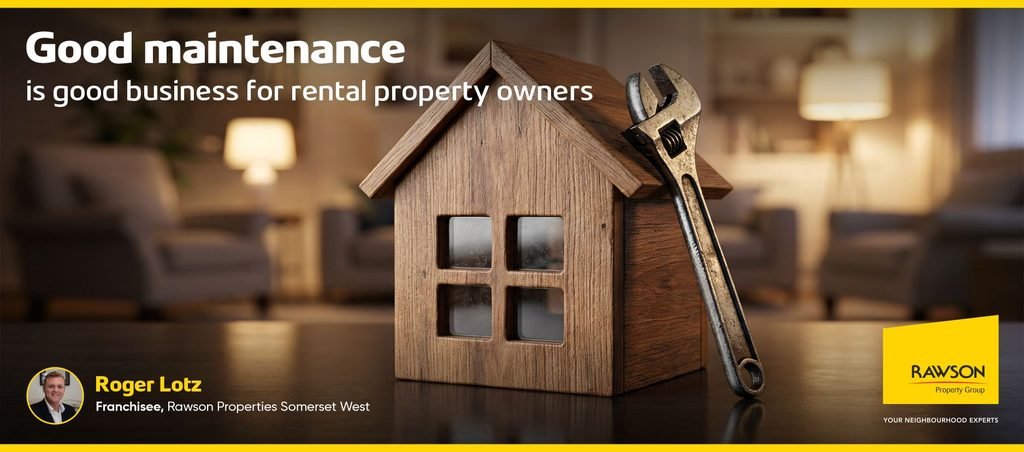
When a rental property is occupied, earning an income and showing no obvious signs of trouble, it’s easy for maintenance to slip down the priority list. “If it ain’t broke, don’t fix it,” right?
While that approach may be tempting, Roger Lotz, Franchisee at Rawson Properties Helderberg, says it’s worth looking at maintenance from a different angle.
The snowball effect
“Good maintenance isn’t only about fixing things when they break,” says Roger. “It’s also about keeping an eye on the condition of your property and dealing with potential problems before they escalate.”
A minor issue like a small leak may be relatively simple to address when it first appears but, left unattended, could lead to lasting damage to ceilings, walls, flooring or cabinetry.
Some problems can even be avoided altogether with timely maintenance. Trimming overgrown trees, for example, is much less costly than fixing roofs or walls damaged by falling branches.
“That doesn’t mean landlords need to jump on every tiny imperfection or spend money unnecessarily,” says Roger. “It’s about knowing the difference between something that can safely wait and something that’s going to snowball into a much bigger problem if it’s not addressed timeously.”
Who’s responsible for what?
Of course, not all maintenance is the landlord’s responsibility. Tenants are expected to take reasonable care of the property and its upkeep, and may be held responsible for any damage they cause beyond normal wear and tear.
Landlords, on the other hand, have a responsibility to maintain the property and its essential components in a safe, functional and habitable condition.
“A good lease should make the division of maintenance responsibilities as clear as possible from the start,” says Roger. “That helps avoid arguments over who needs to do what, but it also makes it easier to get genuine maintenance issues dealt with quickly.
The important thing is that both parties understand their responsibilities and communicate when something needs attention.”
The benefits of good maintenance
Keeping on top of maintenance isn’t only about protecting the physical property, either. Roger says it can also make a meaningful difference to the people living in it.
“Things are going to need fixing from time to time – that’s normal in any home,” says Roger. “What matters to tenants is knowing that when they report a genuine problem, it’s going to be taken seriously and dealt with in a reasonable timeframe.”
When tenants know their landlord is responsive, Roger says they’re more likely to report issues early, rather than waiting until they become bigger – and more expensive – problems. Responsiveness also helps build positive landlord-tenant relationships and gives good tenants fewer reasons to look elsewhere when their lease comes up for renewal.
“Finding a good tenant has real value, so it makes sense to look after that relationship,” says Roger. “If someone is paying their rent on time and taking good care of your property, keeping the home in good condition is a great way to encourage them to stay.”
Maintenance and asset value
The benefits of good maintenance also extend beyond the current tenancy. Keeping a rental property in good condition helps preserve its appeal to future tenants and, ultimately, buyers.
“You have to remember that there are two sides to a property investment,” says Roger. “There’s the income it generates while you own it, and there’s the asset itself. Looking after the property over the years helps put you in the strongest possible position on both fronts.”
Making maintenance manageable
Regular property inspections, clear communication with tenants and making provision for ongoing upkeep can all make maintenance easier to manage – and less likely to come as an unwelcome surprise.
“Maintenance is always going to be part of owning a rental property, but it doesn’t have to be a constant headache,” says Roger. “A little planning and attention along the way can make a big difference to how smoothly your investment runs.”
For landlords who aren’t sure where to start or which maintenance issues should take priority, Roger says a conversation with a good rental agent can be a useful first step.
“Sometimes it just helps to have someone experienced take a look at the bigger picture,” he says. “A good agent can help you work out what needs attention now, what can wait, and how best to look after your investment over the long term.”


